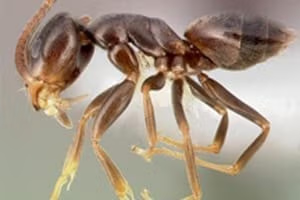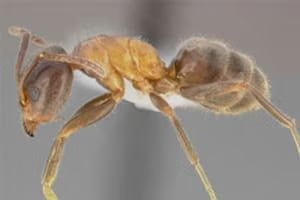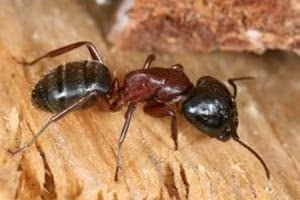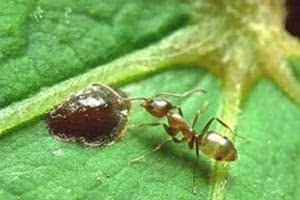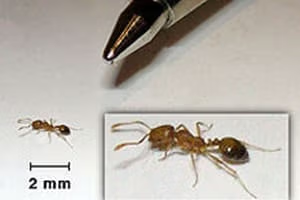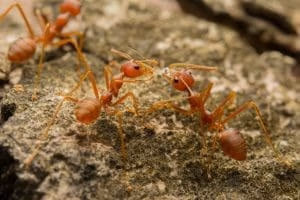
Ants - Ants are social insects that live in colonies. Ants have three body sections: head, thorax, and abdomen along with a pair of antennae. There are either one or two nodes between the thorax and abdomen. Ants have a complete metamorphosis with development through four stages: egg, larva, pupa and adult. The workers, queens, and males make up the three distinct castes of an ant colony. The workers are usually the only ones that are seen outside the nest. Ants can be both beneficial and harmful to humans. Benefits include: predators to other pests, soil formation and pollinators of plants. Ants are most harmful in: damaging wood, invading structures, raiding food sources and occasionally attacking humans. There are thousands of types of ants throughout the world. The following is a list of the more common ants that humans come into contact with:
Argentine Ant - One node with sharp, pointed peak. Brown color; some appear light brown. This ant will feed on a wide variety of foods and is partial to sweets. Argentine ants readily forage along tree and shrub branches and utilize cables and wires to enter structures. When inspecting for Argentine ant trails, the grass and/or mulch should be pulled or raked away from the foundation and from along the edges of driveways and sidewalks. Mulch, especially when in thick layers, should be raked back from the bases of trees and shrubs to check for ant colonies. Any log, stone, firewood, trash, stones, bricks or other debris must be inspected underneath for colonies. Areas of excess moisture should be corrected. Branches of trees and shrubs need to be cut away from the structure’s roof and walls.
Carpenter Ant - One node. Black in color, some are combinations of red and black or completely red or brown. The workers are anywhere from 1/8 to 1/2 inch long with the queens being almost twice that size. The swarmers do have wings and are sometimes mistaken for termites. These ants nest in wood by hollowing out galleries and pushing the sawdust outside. Insulation and body parts may also be expelled from the entrance to galleries. They prefer to nest in wood that has been damaged from moisture or fungus problems but can invade undamaged wood as well. Carpenter ants can create extensive structural damage if left uncontrolled. Eliminate all old or decaying wood around the outside of the structure to help prevent carpenter ant activity. This includes rotting stumps, broken tree limbs, old firewood, rotten fence posts, and any other harborage for a nest to begin. The carpenter ant will usually start a smaller nest and then expand it into undamaged wood as the colony grows in size. They usually feed on insect honeydew, plant juices and insects. Inside they will feed on sweets, meats and grease. Most activity of carpenter ants is in the evening & night when it is cooler but it is not uncommon to see workers during the day. A mature colony can have anywhere from 10,000 to 100,000 ants.
Harvester Ant - Vary in color from red to dark brown. They are about 1/4 inch in size. Stings will be inflicted to both humans and animals when disturbed. When these ants establish themselves in an area, they are very annoying to human outdoor activity. This ant will lock its jaws when it bites and cannot be removed without tearing the ant off. Activity is usually only during the day and when it is warm. They do not invade homes but nest in lawns, around the home, and along paths. The nests are easy to spot because the ants clear vegetation from around the entrance and excavate the dirt from the tunnels inside. They will tunnel underground to make elaborate nests that contain thousands of ants. They prefer seeds, which are collected and stored for the winter.
Little Black Ant - Two nodes. Black color. This ant is closely related to the Pharaoh ant and looks just like it except for its black coloration. The size of this ant is about 1/16 inch with the queen about twice that size. Food of little black ants is the honeydew produced by homopterous insects (e.g., aphids, mealybugs, and scales) and sweet secretions produced by plants. Indoors, little black ants feed on sweets, meats, grease, bread, oils, cornmeal and fruit juices. The little black ant nests in the soil under items, such as rocks, logs or debris. It will also build nests in open areas of soil in lawns and in landscape mulch. Small craters of very fine soil characterize the nests in the ground. Little black ant colonies or individual trails can be found in wall voids, cabinet voids, under the edge of carpets, and in the voids of masonry, such as brick or stone veneer on the outside of the structure.
Odorous House Ant - One node. The “rotten-coconut like” odor can be smelled when one of these ants is squashed. Some people call these the “piss ants”. The odorous house ant worker is about 1/16 to 1/8 inch in size. These ants will nest inside a house in voids or outside usually under objects. Rain or lack of food will drive these ants inside. They prefer honeydew, plant juices, insects and seeds for food. When disturbed they will run around and raise their abdomens. Ants follow foraging trails for food and are easy to spot. The colony can range from hundreds to over 10,000 ants.
Pavement Ant - Two nodes. Grooves are present on head and thorax. Stinger present at tip of abdomen. These ants feed on a wide variety of different foods, including dead insects, greasy foods, seeds and sweets. This ant derives its name from its habit of nesting beside and under sidewalks, driveways and building foundations. The nests are found outdoors in the soil beneath stones, along the edges of curbing, and in cracks in the pavement, especially when the latter is next to the lawn. Inside structures, they are commonly found foraging under the edge of carpets and the bottom of baseboards where the infestation is not easily visible. Pavement ants will be found foraging inside heated buildings throughout the year, although they are observed in greatest numbers during the summer. Activity on counters and around trash containers is common and any bit of food dropped on the floor can literally become black with ants within a short time.
Pharaoh Ant - Two nodes. Yellow to reddish brown coloration. They are about 1/16 inch long. These ants have been observed feeding on such sweets as sugar syrups, fruit juices, jellies, cakes and fruit pies, as well as greases. Although this ant feeds on sweets, it is believed by some to prefer fatty foods. In buildings, nests are usually first located in warm, moist areas such as the kitchen and bathrooms in a home or apartment. Outside these ants are most often found near heating pipes and radiators, sinks, drains and toilets. The main factor in the success of a Pharaoh ant management program is to eliminate as much potential food and water as possible on which ants could feed. Good sanitation forces the foraging workers to be more receptive to ant baits. Only about 10 percent of the colony is ever seen outside the nest at the same time. It is common for the colony to continually split and make several colonies when disturbed, making control even more difficult.
Thief Ant - Two nodes. They are yellow in color. These ants are very tiny, about 1/16 inch, probably the smallest ants found infesting structures. Often confused with the pharaoh ant. The primary difference between the two species is the thief ant has a 2-segmented antennal club while the pharaoh ant has a 3-segmented club. Thief ants often feed on the larvae and food of other ants. They are also predacious on the immature stages of many insects. They will also feed on other food found within structures, such as dead insects and grease. They also feed on germinating seeds and the honeydew produced by aphids, mealybugs, and others. Trails of thief ants may be found along baseboards, on walls, in closets, inside cabinets, particularly ones that contain food products, around sinks and along windowsills. Foraging workers may be found trailing onto the building from tree and shrub branches, which brush against the structure. Any item in contact with the soil, such as rocks, logs and debris could harbor an ant colony. Nest outdoors may be located in the soil under items such as rocks or logs and inside decaying wood found in stumps and logs.
Velvety Tree Ant - One node. Head is brownish black, thorax is red and abdomen is velvety black. They are between 1/16 and 1/4 inch in size and the workers give off distinct odor when crushed. Velvety tree ants feed on insects and the honeydew produced by aphids, mealybugs, and scale insects, and will protect these insects from natural enemies. Like carpenter ants, the velvety tree ant and its relatives are generally associated with dead wood and trees outdoors. These ants, however, are more closely associated with trees than are the carpenter ants. Colonies may occur in trees, stumps, dead logs, firewood, dead tree limbs and the crotches of trees. Close attention should be paid to possible nests in the soil at the base of trees, logs, and stumps, and beneath stones and landscape timbers. Piles of displaced soil will be a clue that ants are present. Interior infestations will likely be found near a source of moisture. Bathrooms seem to be an attractive site, particularly when past water leaks have occurred and the bathroom is located along an exterior wall.
Fire Ant - There are the two most important types of species, which are about 1/16 to 1/4 inch in size. The Red Imported Fire Ant has two nodes. Color is reddish brown with the abdomen being darker. A stinger is usually present and inflicts a painful sting. Fire ants will feed on almost anything including oils, insects, animal carcasses, garbage, seeds and small birds and animals. Trails can usually be located without too much difficulty along sidewalks and foundations. Pulling back the grass from along the edges of sidewalks, patios and the building foundation will often reveal foraging workers and colonies, which may be hidden from view. Mounds are often found at the base of trees and shrubs and in the crotches of trees. Any item in contact with the soil, such as logs, stones, firewood and other debris, could harbor a fire ant colony. Once inside a building, fire ants often forage along walls and under the edges of carpets. The Southern Fire Ant also has two nodes. Color is reddish brown and a stinger is usually present. This ant is an omnivorous feeder and is known to eat meats, grease, butter, seeds, grains, nuts, meats and similar products. They are especially fond of protein-containing foods. The ants will attack the bases of plants, especially if the nest is close, will remove seeds from the plant and will bore into vegetables and fruits. Nests occur as exposed mounds in lawns or may be partially or completely concealed under boards, stones, at the base of plants, etc. The nests are also found in rotten wood, cracks in concrete work, beneath houses, and especially around fire hearths, where artificial heat stimulates them to year-round activity. The nests consist of loose soil, with many craters often scattered over extensive areas. Southern fire ants are native to North America and have largely been displaced in the southeastern United States by the red imported fire ant.
CALL TODAY
Get your problems taken care of NOW...Same day appointments available!
Nevada County:
(530) 273-1766
Placer County:
(530) 885-8741
South Placer County:
(916) 632-6802
or by:
Email
Get social and stay updated with Economy Pest Control!
ANTS
Ants - Ants are social insects that live in colonies. Ants have three body sections: head, thorax, and abdomen along with a pair of antennae. There are either one or two nodes between the thorax and abdomen. Ants have a complete metamorphosis with development through four stages: egg, larva, pupa and adult. The workers, queens, and males make up the three distinct castes of an ant colony. The workers are usually the only ones that are seen outside the nest. Ants can be both beneficial and harmful to humans. Benefits include: predators to other pests, soil formation and pollinators of plants. Ants are most harmful in: damaging wood, invading structures, raiding food sources and occasionally attacking humans. There are thousands of types of ants throughout the world. The following is a list of the more common ants that humans come into contact with: