Rodents - Rodents have a list of negative impacts when they invade people’s structures. They are a nuisance, destructive to property, are disease carriers, and contaminate food. Rodents are known to contaminate a considerable amount of the worlds food supply with at least 20% being affected. Their two pairs of incisors continuously grow and require eating and gnawing to keep them worn down. Most rodents are nocturnal, causing many nights of unrest for the resident of an infested home and are usually only seen during the day if a large population is present. Rodents are active year round but most infestation takes place during the fall and winter. Bad weather, lack of food and rising water levels drive the rodents out to find accessible accommodations. It is easy for them to find their way into a structure and travel through the attic, walls, sub area, and along pipes. Rodents can fit in extremely small holes and if a hole is to small, rodents will enlarge the entrance. They collect material for their nests such as, clothing, insulation, and other unusual materials. Once an infestation is noticed, it is best to start control of rodents immediately. Bait or traps are used and will take time to reduce the population.
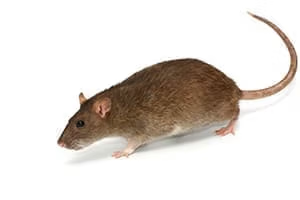
Roof Rat - The roof rat is the smaller of the rat species. It is 6 – 8 inches in length with a tail that is 7 – 10 inches long. It has large eyes and ears and a pointed muzzle. Signs of infestation are gnawing marks, fresh droppings, damaged goods, runways, tracks and greasy rubbing markings. The roof rat has poor vision and is colorblind but has a good sense of hearing, smelling, tasting and touching. Transmitted diseases include bubonic plague, Weil’s disease, rat-bite fever, trichinosis and food poisoning. The roof rat is normally nocturnal and is cautious, staying away from new objects for a while. A roof rat can squeeze through a hole that is half an inch in diameter, leaving many structures vulnerable to infestation. The way to control these rodents is by sanitation, rat proofing the building, elimination of the nest and possible rat bait or trap placement.
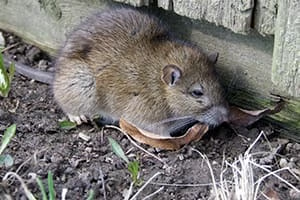
Norway Rat - The Norway rat is the largest of the commensal rodents being 7 – 9 ½ inches in length with a tail that is 6 – 8 inches in length. The rat has a stubby snout with small eyes and ears. Signs of infestation include gnaw marks, fresh droppings, damaged goods, runways, tracks and greasy rubbing markings. The Norway rat has poor vision and is colorblind but relies on a good sense of hearing, smelling, tasting and touching. They are good runners, jumpers, swimmers and climbers. The Norway rat is cautious and shy and will stay away from new objects for a while. Norway rats will normally nest in basements or in lower portions of undisturbed piles of debris. These rats prefer meat, fish and cereal but will eat mostly anything. Control of these rodents is best achieved by sanitation, rodent proofing the structure, elimination of the nest and possible rat bait or trap placement.
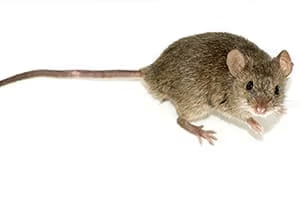
House Mouse - The house mouse is the most commonly encountered rodent. This rodent is about 2 ½ – 3 ½ inches in length with the tail measuring an extra 2 ¾ – 4 inches in length. The house mouse has a pointed muzzle with small eyes and large ears. Signs of infestation include gnaw marks, fresh droppings, damaged goods, runways, tracks and greasy rubbing markings. Mice prefer seeds or cereals. Mice are also very social. They will show aggression towards strangers of their kind. They are also very curious and will explore new things and change their routes frequently. A mouse will only require a ¼ inch hole to enter a building. Nesting sites are dark secluded areas made up of paper, cotton, packing materials and fabrics. The way to control these rodents is by sanitation, rodent proofing the building, elimination of the nest and possible bait or trap placement.
CALL TODAY
Get your problems taken care of NOW...Same day appointments available!
Nevada County:
(530) 273-1766
Placer County:
(530) 885-8741
South Placer County:
(916) 632-6802
or by:
Email
Get social and stay updated with Economy Pest Control!
RODENTS
Rodents - Rodents have a list of negative impacts when they invade people’s structures. They are a nuisance, destructive to property, are disease carriers, and contaminate food. Rodents are known to contaminate a considerable amount of the worlds food supply with at least 20% being affected. Their two pairs of incisors continuously grow and require eating and gnawing to keep them worn down. Most rodents are nocturnal, causing many nights of unrest for the resident of an infested home and are usually only seen during the day if a large population is present. Rodents are active year round but most infestation takes place during the fall and winter. Bad weather, lack of food and rising water levels drive the rodents out to find accessible accommodations. It is easy for them to find their way into a structure and travel through the attic, walls, sub area, and along pipes. Rodents can fit in extremely small holes and if a hole is to small, rodents will enlarge the entrance. They collect material for their nests such as, clothing, insulation, and other unusual materials. Once an infestation is noticed, it is best to start control of rodents immediately. Bait or traps are used and will take time to reduce the population.